

SNJ team: It feels like the disability and SEND community are under attack at the moment, with Labour plans to cut disability benefit entitlements and worries over their future plans for SEND. Today’s article is from new writer, Bethany Bale, who leads Disability Rights UK’s education policy work and young people’s engagement work. Disability Rights UK (DR UK) is the UK’s leading Disabled People’s Organisation (DPO), meaning they are led by, run by, and work for Disabled people.
Bethany, who herself has lived experience of disability, is discussing life beyond an EHCP, and equipping young people with the tools they need to make them ready for their future. Disabillity Rights UK has recently launched “Be Future Ready” a hub for employment and education to help support young people through their post-16 options, knowing your rights and more.

Education can act a bit like a conveyor belt, always focused on reaching the next step. Whether that be an exam, deadline, or qualification, we tend to know what we’re aiming for. Don’t get me wrong; that conveyor belt can feel like a mountain. Knowing what’s next in no way undermines the exhaustion or injustice of the barriers we face in education. But the education journey can feel clearer. Particularly in a world that prioritises getting into work above all else, the value of school and what we should be aiming for is instilled into us from a very early age.
But what happens when our education ends, and we get flung off the conveyor belt?
We often talk about transitions when challenging special educational needs and disabilities (SEND) policy. We highlight how difficult these transitions can be when the systems that are meant to help us rarely provide the support that we need, and the responsibility falls on us to advocate for ourselves. But we sometimes don’t take the time to reflect on just how distressing this personal experience can be.
Moving into the adult world brings more challenges when you’re disabled
Most people can relate to feeling stressed after finishing their education, with the world at their fingertips and no clue where to start. But for Disabled people, this transition can be a lot more overwhelming. We’re launched into an unjust world with the responsibility to be our own advocates. Suddenly, the rest of your life is before you, rather than the next school year, and it feels insurmountable.
I remember going to university scared but excited to try something I’d always been told I wouldn’t be able to do. But when I graduated and lived independently for the first time, I was terrified. Suddenly, every risk and responsibility was mine to manage alone. I felt like I’d reached the summit I’d been climbing to all my life, only to find another mountain three times the size and no ability to turn back. I had friends and family to lean on when needed, but that didn’t take away the anxiety of independence. What’s been most empowering as a Disabled adult has been to find community with other Disabled people and challenge the responsibilities and expectations that I never consented to take on.

A hub for post-16 transition and beyond
DR UK believes that everyone should feel empowered to know their rights and advocate for themselves. But we also recognise how difficult that can be. We also work with other Disabled People’s Organisations to fight for our rights so that, hopefully, one day, we won’t need to advocate for ourselves all the time.
This is why we’ve created Future Ready – a hub for everything you should need for the post-16 transition and beyond. The Hub includes resources, access to our Disabled Students Helpline, personal stories from other young Disabled people, and more. You can also sign up for our Future Ready Newsletter and get helpful advice and exciting opportunities sent to your email every month. We hope that being equipped with the knowledge of your rights is not only helpful but reminds you that you’ve never been the problem – the system has always been unjust.
DR UK is currently in the process of evaluating how we can better centre the voices of young Disabled people in our work, and the creation of Future Ready is part of this. You can also find us on TikTok, and watch the conference we held last year on making space for young people in the disabled people’s movement.
What is a Disabled People’s Organisation?
DR UK is a national charity but also a Disabled People’s Organisation (DPO) – this means that we’re led by, run by, and work for Disabled people. DPOs work on the principle that there should be ‘nothing about us without us’. The history of DPO activism can be traced back to the 1970s, when a group of Disabled People fought back against their treatment by non-representative charities that would institutionalise and mistreat us. The first DPO in the UK was the Union of the Physically Impaired Against Segregation (UPIAS), made up of residents of a Leonard Cheshire home. Their resistance included making up and singing songs, and poking fun at the staff who terrorised them, to cope with the inhumane conditions of long-stay institutions[1].
The principle of ‘nothing about us without us’ is just as relevant for young Disabled people. Too often, our voices aren’t heard, and decisions about our lives are made without us. The best way to change a broken system is to be led by those with lived experience, and DR UK hope to become a national platform for the voices of young Disabled people – so please get in touch if you’d like to get involved!
You’re not alone
Although facing an ableist world is overwhelming, it’s important to remember that you’re never truly alone in your experience. Disabled people have a powerful history of standing up for what’s right and supporting each other, and we fight every day to challenge the barriers that are unfairly placed on us.
If you have any thoughts on what you’d like to see from DR UK in this space, or if you know a young Disabled person who would like to feature in our Future Ready Newsletter, please email us and if you’d like to find out more about DR UK’s work head over to our website.
[1] Ellen Clifford, 2020 (pg. 19) – The War on Disabled People: Capitalism, Welfare and the Making of a Human Catastrophe

Disabled Children’s Rights are Under Attack.
We’re fighting, but we can’t do it alone: we need your help more than ever.
We’re volunteer-run, but costs are rising. To help us keep going, please consider a one-off or, if it’s possible, a regular donation.
Read more about being a regular donor here.
We use Zeffy to fundraise, which doesn’t charge us a fee, so 100% of your donation reaches us.

Also read:
- Will £740m make mainstream truly accessible? Plus SEND safety valve deals halted—we call that a win!
- Research informs policy: Bringing the lives of people with profound learning disabilities into the academic space
- Should we ‘mind the gap’ of disabled pupils’ attainment? Or is it really an indictment of how success is measured?
- Parent carers protest as 92.3% say engaging with their local SEN Team was “actively detrimental to their mental health”
- Do Academies turn away children with Special Needs?
- Does the government really want to support disabled young people to go to university?
- The same but different: Understanding SEND and inclusion in schools today
- Without detailed plans for its planned “Inclusion Dashboards”, the DfE is navigating towards an Inclusion Illusion
- Disabled children increasingly turned away from early years settings. A SEND charity aims to tackle the SEND inclusion crisis
- School exclusion and the SEND proposals: Last chance to respond to the Government’s Call for Evidence on reforming exclusions

- Let’s scrutinise it: Why ministers should publish a draft SEND Bill now to enable Pre-Legislative Scrutiny
- What is the cost of an EHCP that isn’t delivered? And who’s responsible for checking it is?
- Book Review: Flush Forward! Rethinking Toileting for Disabled and Neurodivergent Young People
- Four real risks posed by plans to move away from child-centred SEND principles, towards NHS-style commissioning
- Early 2027 for Education and SEND Bill but how far will the Government row back on rights plans? Parental trust and confidence depend on it
- Locked out of holiday fun: SEND reform must tackle the provision gap for disabled children in care
- Training new teachers to arrive skilled, confident, and ready to support their pupils with SEND
- “We don’t see that here”: How teachers can better navigate a parent’s different view—and why pupil voice and professional curiosity are vital
- The AI-generated Local SEND Reform Plans that will dictate local SEND provision and their huge hidden risks even LAs can’t ignore
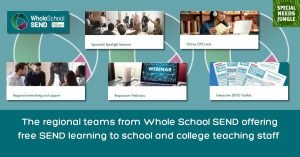
- The regional teams from Whole School SEND offering free SEND learning to school and college teaching staff
- Why ‘functioning’ might be the missing piece in the SEND reform puzzle
- The child behind the symptoms: Why MCAS is being missed in children and young people
- The government must not ignore stark warnings about lack of mainstream SEND capacity reported by its own research
- What makes an autism assessment report genuinely useful to a school?




 The Unacceptable Truth: 20 SEND legal rights at risk from the Government’s SEND reformsSeptember 9, 2026
 Research: SEND case officers are LAs’ “human shield” gatekeepers. But parents shouldn’t have to be their own key workersSeptember 22, 2026


Don’t miss a thing!
Don’t miss any posts from SNJ – simply add your email address below. You must click the link in the confirmation email you’ll receive to activate your free subscription.
You can also keep up with us by following our
Want more? Be an SNJ regular donor!
SNJ is a non-profit and everyone who writes here does so voluntarily. We need your support to help us with costs by donating once or as a regular patron. Find out more here
- Becoming Future Ready for adult life as a Disabled young person - April 23, 2025
Please share this article!

Discover more from Special Needs Jungle
Subscribe to get the latest posts sent to your email.
